
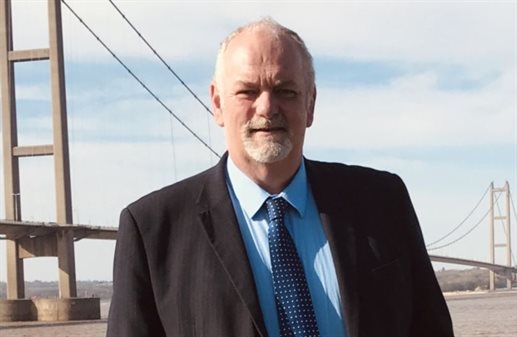
A political tinderbox is threatening to catch fire in Hull and East Yorkshire after the Humberside Police and Crime Commissioner sent Prime Minister Andy Burnham a hard-hitting letter criticising the direction of devolution. The strongly-worded letter claims ‘our region has lost momentum’ and is not realising the full economic opportunities of the devolution deal.
The letter has been written by Jonathan Evison, the Police and Crime Commissioner (PCC) for Humberside, and Leo Hammond, his deputy. They are both concerned that elected mayors could mean the redrawing of police force boundary lines and are worried that means local communities will be put at risk.
But Luke Campbell, the Reform UK Mayor of Hull and East Yorkshire, has hit back stating: “I have to say I find the tone and timing of this pretty bizarre. These devolution deals were agreed before I became Mayor. We are where we are, and my job is to make the deal we have work.
“What I struggle with is the change of tune and approach to working together. The PCC sits on our board and previously talked about working closely and positively with local leaders through these policing changes. I welcomed that approach. This intervention is unhelpful to the constructive relationship we need across the Humber.”
‘Missed opportunities’ – time to go back to the drawing board on devolution?
The Humberside Police and Crime Commissioners are convinced Mr Burnham needs to go back to the drawing board on devolution, arguing that communities would get ‘more bang for their buck’ by being represented by a mayor for the whole of the Humber region.
That could mean linking Hull, Grimsby, Scunthorpe, county towns and rural areas around East Yorkshire and Northern Lincolnshire again – in an echo of Humberside County Council. The old Humberside council was abolished in 1996.
“The Humber is one of the largest port complexes in the country, one of its largest industrial clusters, is vital for trade and has many sites of key national infrastructure and security. It would be foolish to split his area between two police forces,” the Humberside PCC letter states.
The letter also shares deep concerns around HEYCA’s failure to appoint a Deputy Mayor, the organisation’s struggle in recruiting a Chief Executive and what the crime commissioners claim is a corporate overspend on salaries at the organisation.
The letter states: “While we and others have put aside politics and have tried to work with and support the new mayor and his office for the good of our region, due to a lack of vision, understanding and will on the part of the mayor and combined authority this has not been productive.”
The final part of the three-page letter rings alarm bells about the region missing out on economic opportunities, adding: “We are deeply concerned that this will be compounded by a costly and disruptive reorganisation of public services to match geography that makes little sense. It is time to admit that a mistake was made and put it right.”
Mayor Campbell demands an apology
But Mayor Campbell is demanding an apology for the content of the letter and is backing his staff to work effectively with partners across the wider region. “Their own letter now argues for changing the devolution map in a way that would make the move away from the Police and Crime Commissioner model easier. People can make their own minds up about that,” he said.
“I also think some of the comments about HEYCA as an organisation are unfair to the officers who work tirelessly for this region. Challenge me – that comes with the job – but I don’t think it is right to talk down the teams working every day to deliver for our communities. I think the PCC and Deputy PCC should reflect on that and apologise to those staff.”
Mayor Campbell added: “I’m proud to be Mayor of Hull and East Yorkshire. We can work properly across the Humber without talking our own region down. HEYCA will continue to engage constructively with government, Greater Lincolnshire, Humberside Police, local authorities and partners as the national policing reforms and the agreed Humber governance review develop.”
National government has confirmed that HEYCA and the mayoral authority for Greater Lincolnshire will review their governance and geography in the third year of the Mayors’ terms – effectively assessing how partnership arrangements are delivering for the Humber, a spokesperson for the mayoral authority said.
Making the complex process of devolution work
The leader of Hull City Council and HEYCA Executive Board lead member Cllr Mike Ross underlined his commitment to making the complex process devolution work in Hull and East Yorkshire – despite the clear challenges of working with people with radically different ideas about politics.
“As a liberal democrat leader I want to make sure that devolution works for our region. It’s incredibly important we don’t miss out, that’s why we wanted to go down this route in the first place. But I’m not convinced about changing the boundaries at this time. But HEYCA needs to show serious improvement and to start delivering real change,” he said.
Mr Evison echoed the sentiment of his letter to the Prime Minister with a Facebook post that worried his followers with the possibility of the local police force being split in two across the Humber.
“It raises great concerns for us that both our police force and fire service will be split in two. It is our opinion that this would be terrible for our communities and they would see a lesser service, fewer officers and the overstretching of resources both in Lincolnshire and East Yorkshire. This would put both our local communities and the key national infrastructure in our region at risk,” his social media post stated.
Sources close to Hull City Council say there are a significant number of people in the region who have raised serious concerns about how the HEYCA is performing, with both the business community and political figures being concerned about a lack of progress.
Navigating challenging political headwinds
But Reform insiders argue the fierce critique of Mayor Campbell’s new authority (which has now been in place for just over 500 days) fails to account for the political headwinds facing the newly elected regional leader. As a Reform mayor operating within a local political landscape controlled by Lib Dems and Conservatives, and with a mix of Labour and Conservative MPs around the region – Mayor Campbell occupies an inherently isolated position in regional government.
Unlike regional mayors from major establishment parties who enjoy alignment with local authorities or national government, Mayor Campbell is not plugged into high-level political support networks close to home. However, he is believed to have a strong working relationship with Prime Minister Andy Burnham.
Supporters of Hull and East Yorkshire’s mayor have underlined that building a new combined authority from the ground up requires fiscal caution and careful structural groundwork, rather than rushed appointments that could bind the administration to old ways of operating.
Luke Campbell was elected as the first mayor for Hull and East Yorkshire in a May 2025 election – receiving 48,491 votes, ahead of Liberal Democrat Mike Ross, who came second with 37,510 votes.
It is believed HEYCA is laying the groundwork for a push towards Established Mayoral Strategic Authority (EMSA) status, which is the next step in governance and would grant the authority the highest level of devolution available. This move was discussed at the Executive Board meeting on Friday September 25th and could unlock substantial benefits for the region, including a multi-year funding settlement and greater control over local services.
The EMSA status could mean HEYCA requesting more powers directly from the government, potentially leading to more tailored and effective public services for resident. The authority becomes eligible to apply for this designation on November 6th. But to be successful, HEYCA must demonstrate strong governance, effective leadership, exemplary financial management, and robust assurance arrangements – all of which are crucial for ensuring public funds are used wisely and services are delivered efficiently according to government guidelines.
By: Paul Drury-Bradey, LDRS